
|
Getting your Trinity Audio player ready... |
The Kenyan government says it has spent more than Ksh.28 billion to protect households and businesses from the effects of the ongoing global fuel crisis that has pushed fuel prices higher across many countries.
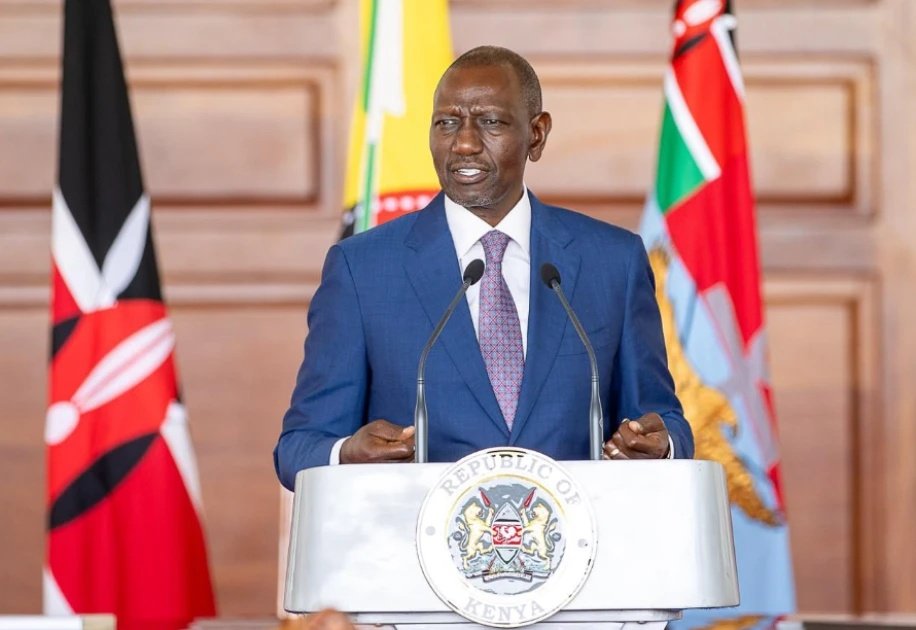
Speaking during a national address from State House in Mombasa, President William Ruto defended his administration’s response to the sharp rise in fuel prices, insisting that the crisis was largely caused by global events beyond Kenya’s control.
According to the President, tensions and disruptions in the Strait of Hormuz following the escalation of conflict involving Iran earlier this year severely affected global fuel supply chains. The situation triggered a sharp increase in international oil prices within weeks.
Ruto said global fuel prices surged dramatically, with Super Petrol increasing by 54.4 percent, Diesel by 118.5 percent, and Kerosene by 126.4 percent.
Because Kenya imports most of its fuel from the Gulf region, the country was heavily affected by the global supply shock.
Government Says It Took Immediate Action
President Ruto stated that the government introduced several emergency measures to prevent fuel prices from rising even further for ordinary Kenyans.
“The government of Kenya has not stood by. We have undertaken several consequential interventions,” he said.
One of the key measures involved using the Petroleum Development Fund to stabilize fuel prices during the April-May and May-June 2026 pricing cycles.
According to the government, Ksh.13.74 billion was directly spent on fuel subsidies during the two periods.
In addition, the government reduced Value Added Tax (VAT) on petroleum products from 16 percent to 8 percent in collaboration with Parliament. Officials say the move cost the government Ksh.14.43 billion in lost tax revenue but helped reduce pressure on consumers and businesses already struggling with rising living costs.
Fuel Prices Reduced Through Subsidies
During the April-May 2026 pricing cycle, the government reportedly spent Ksh.6.04 billion on fuel stabilization and gave up Ksh.6.41 billion in VAT revenue.
The interventions reduced prices by:
- Ksh.19.67 per litre for Super Petrol
- Ksh.40.25 per litre for Diesel
- Ksh.115.03 per litre for Kerosene
For the current May-June cycle, another Ksh.15.72 billion was spent on stabilization measures and VAT relief.
As a result, the government says prices dropped further by:
- Ksh.15.87 per litre for Super Petrol
- Ksh.44.89 per litre for Diesel
- Ksh.78.62 per litre for Kerosene
President Ruto argued that without the subsidies and tax cuts, fuel prices would have been significantly higher across the country.
According to figures shared by the President, Super Petrol would currently retail at Ksh.230.12 per litre instead of Ksh.214.25, while Diesel would cost Ksh.277.75 instead of Ksh.232.86.
More Relief Expected for Diesel Consumers
In a move aimed at reducing transport and business costs, the President also announced an additional Ksh.10 reduction in diesel prices beginning in the June-July pricing cycle.
The government believes the move could help stabilize transportation costs and ease inflation pressures affecting food and commodity prices nationwide.
Pressure on Kenya’s Economy Continues
Despite the relief measures, the fuel stabilization program is expected to place additional strain on Kenya’s already stretched public finances.
Kenya’s debt servicing currently consumes a significant portion of government revenue, raising concerns among economists about the long-term sustainability of continued subsidies.
President Ruto, who is expected to seek re-election in 2027, has faced repeated protests over the rising cost of living during the past three years. In 2024, nationwide demonstrations forced the government to withdraw proposed tax increases worth billions of shillings.
Still, the President defended the government-to-government fuel importation framework introduced in 2023, saying it helped guarantee uninterrupted fuel supply and stabilized the Kenyan shilling by reducing pressure on foreign exchange demand.
“Without it, the country’s situation would be far worse today,” Ruto said.
The government maintains that the interventions have protected millions of Kenyans from deeper economic hardship as global energy markets remain volatile.