



|
Getting your Trinity Audio player ready...
|
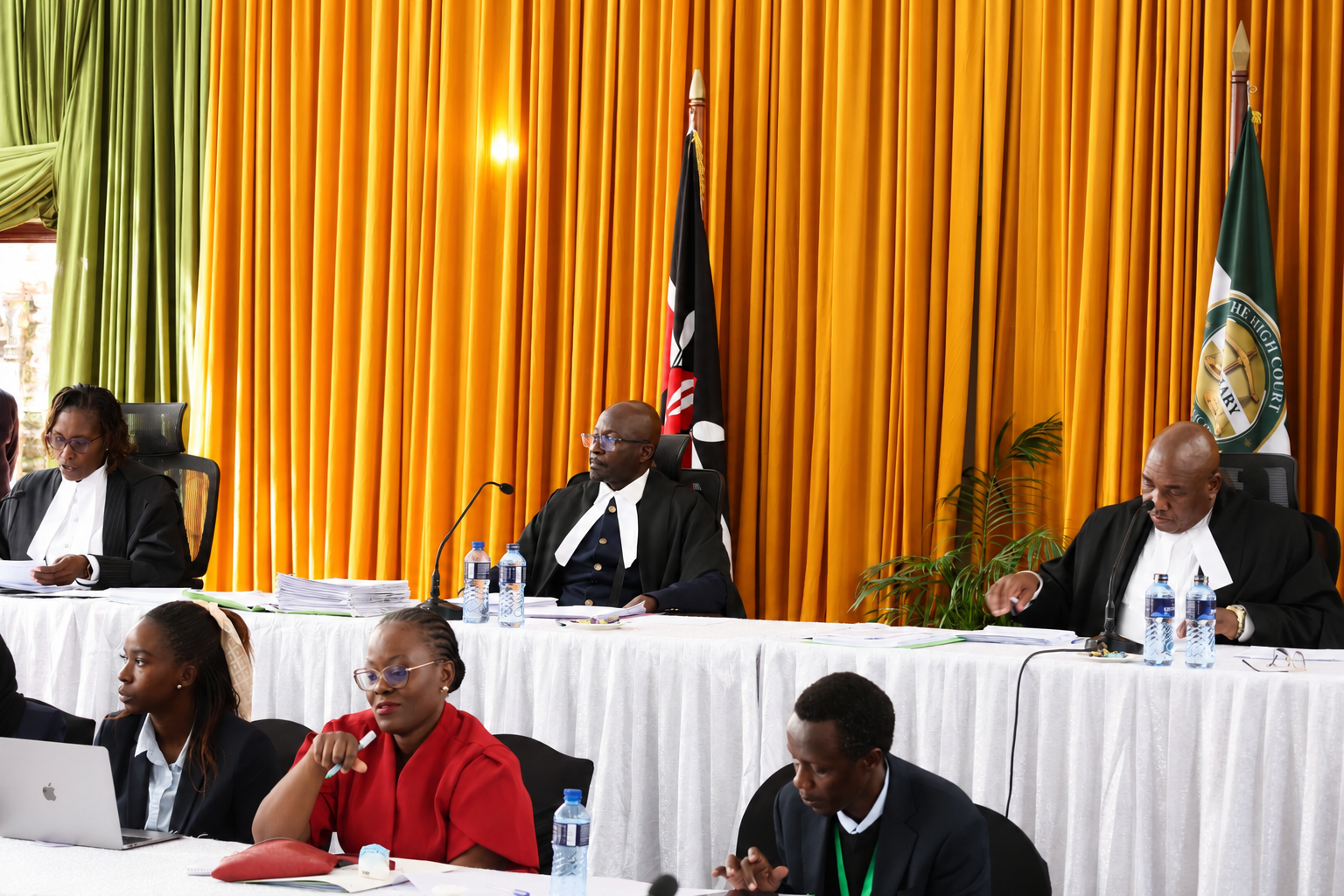
The High Court has upheld the legality of the public participation exercise conducted by the National Assembly during the impeachment of former Deputy President Rigathi Gachagua.
In a landmark ruling, the court found that the public engagement process met the constitutional standards required for such proceedings, despite concerns raised about logistical and operational challenges experienced in some areas.
The judges noted that challenges are common in large national exercises conducted within limited timelines and do not automatically make the entire process unlawful.
“It is to be expected that logistical and operational challenges may arise in certain isolated cases during large-scale national exercises conducted under time pressure. Such localized challenges do not invalidate the entire process,” the court ruled.
According to the judgment, evidence presented before the court showed that the National Assembly provided Kenyans with a fair and accessible opportunity to participate in the process.
“The evidence before this court shows that the door was opened widely, accessibly, and in good faith,” the judges stated.
The court also dismissed claims that the public participation exercise was invalid because Rigathi Gachagua’s response to the impeachment charges was not made available to the public during the participation period.
Judges clarified that public participation in an impeachment process is different from a court hearing and should not be treated as a trial.
“The fact that His Excellency Gachagua’s response to the charges was not available to the public during the participation window does not, by itself, render the exercise deficient,” the judgment stated.
The bench further explained that public participation was intended to gather citizens’ views and not to serve as a platform for determining the merits of the charges against the former Deputy President.
“The process was never intended to be a mini-trial of the charges,” the court said.
The judges affirmed that the Constitution grants the National Assembly and the Senate the authority to make final decisions on impeachment matters as representatives of the people.
“The Constitution vests the final decision-making authority in the National Assembly and the Senate, both of which are representative bodies exercising a delegated mandate from the people,” the ruling stated.
On whether Parliament complied with earlier court directives requiring constituency-level public engagement, the court found that the National Assembly had taken clear and timely steps to implement the orders. These included conducting structured public hearings across the country and collecting public views through constituency offices.
The court also rejected claims that the public participation exercise was merely a formality. It cited documentary evidence, constituency reports, and other materials presented by Parliament as proof that the process was genuine.
Additionally, judges dismissed allegations of irregularities in participation statistics, ruling that the figures presented were mathematically consistent and within acceptable limits.
The ruling strengthens Parliament’s position in the impeachment process and affirms the constitutional role of public participation in major governance decisions.v